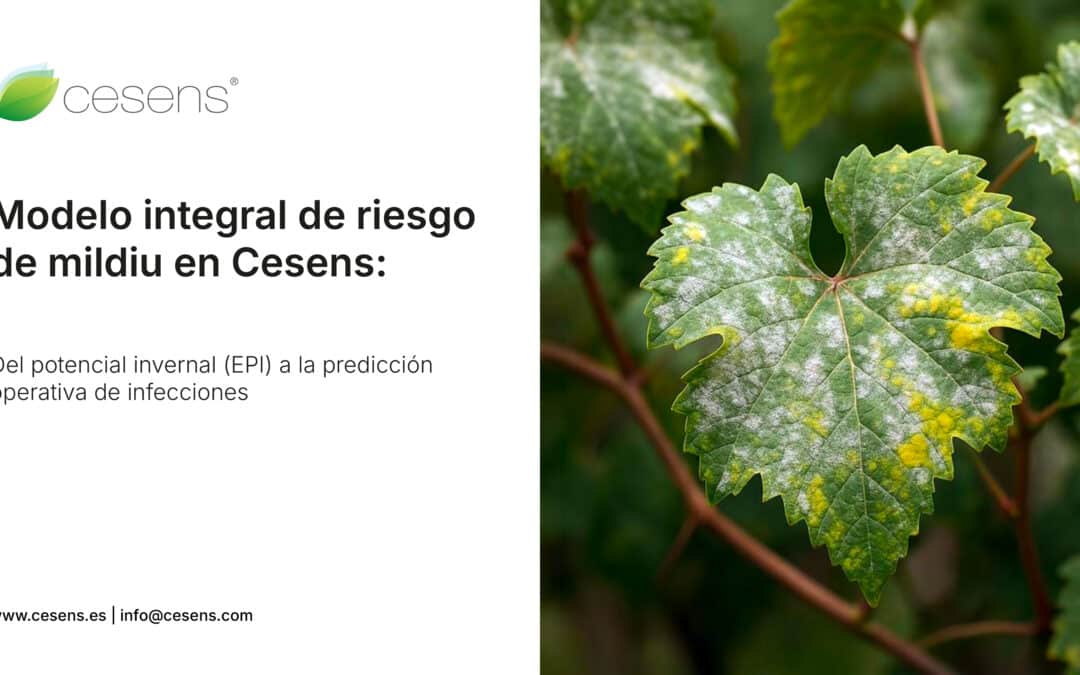
In this article, we explain how Cesens’ comprehensive downy mildew risk model works and, in particular, the new integration of the EPI (winter infection potential) model into our methodology. This addition goes a step beyond simply identifying specific high-risk days, as it allows us to analyze the pathogen’s entire lifecycle—from its potential at the start of the growing season to the operational prediction of primary and secondary infections.
The goal is to transform meteorological and field data into useful, understandable, and actionable alerts to support decision-making in the vineyard.
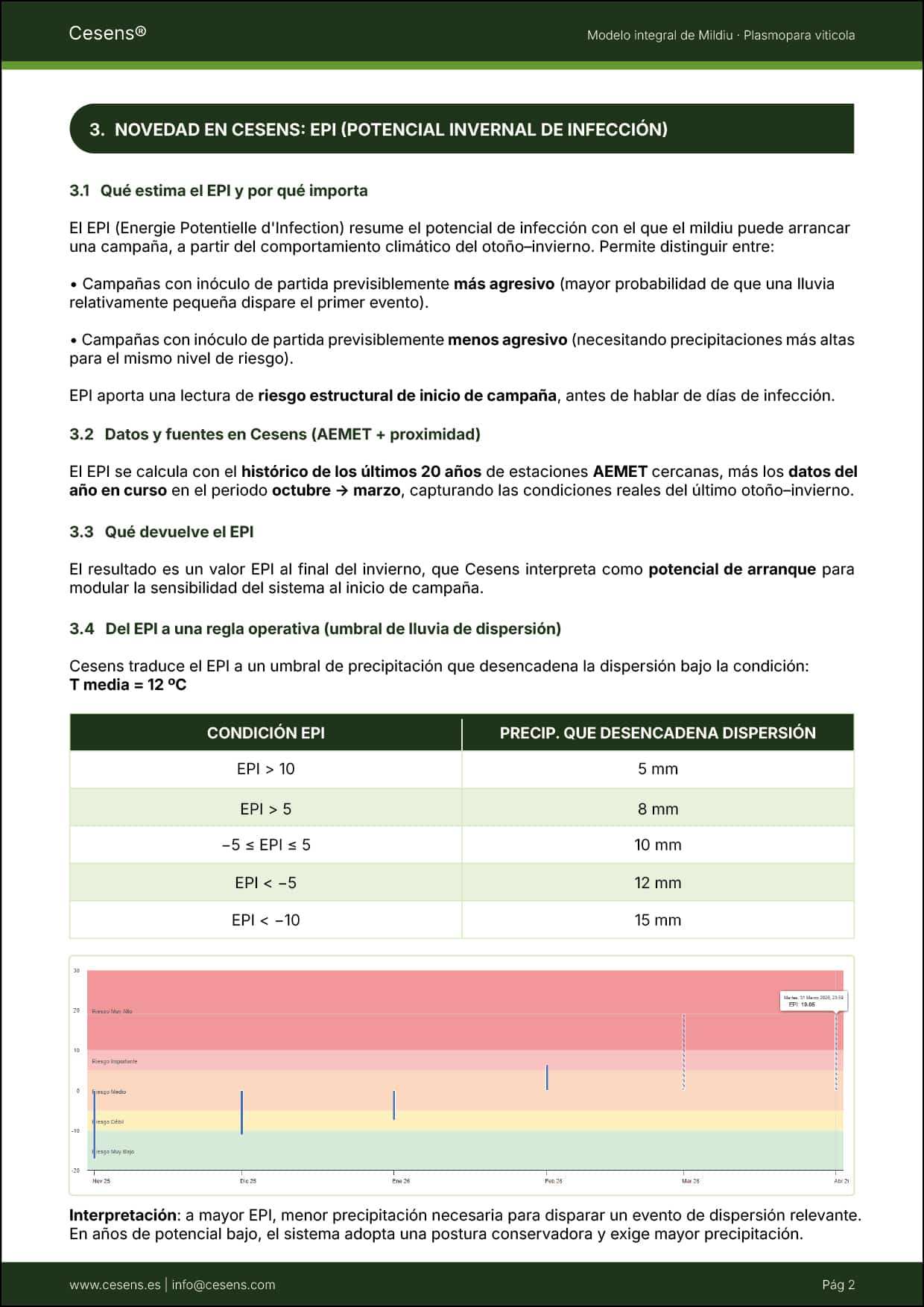
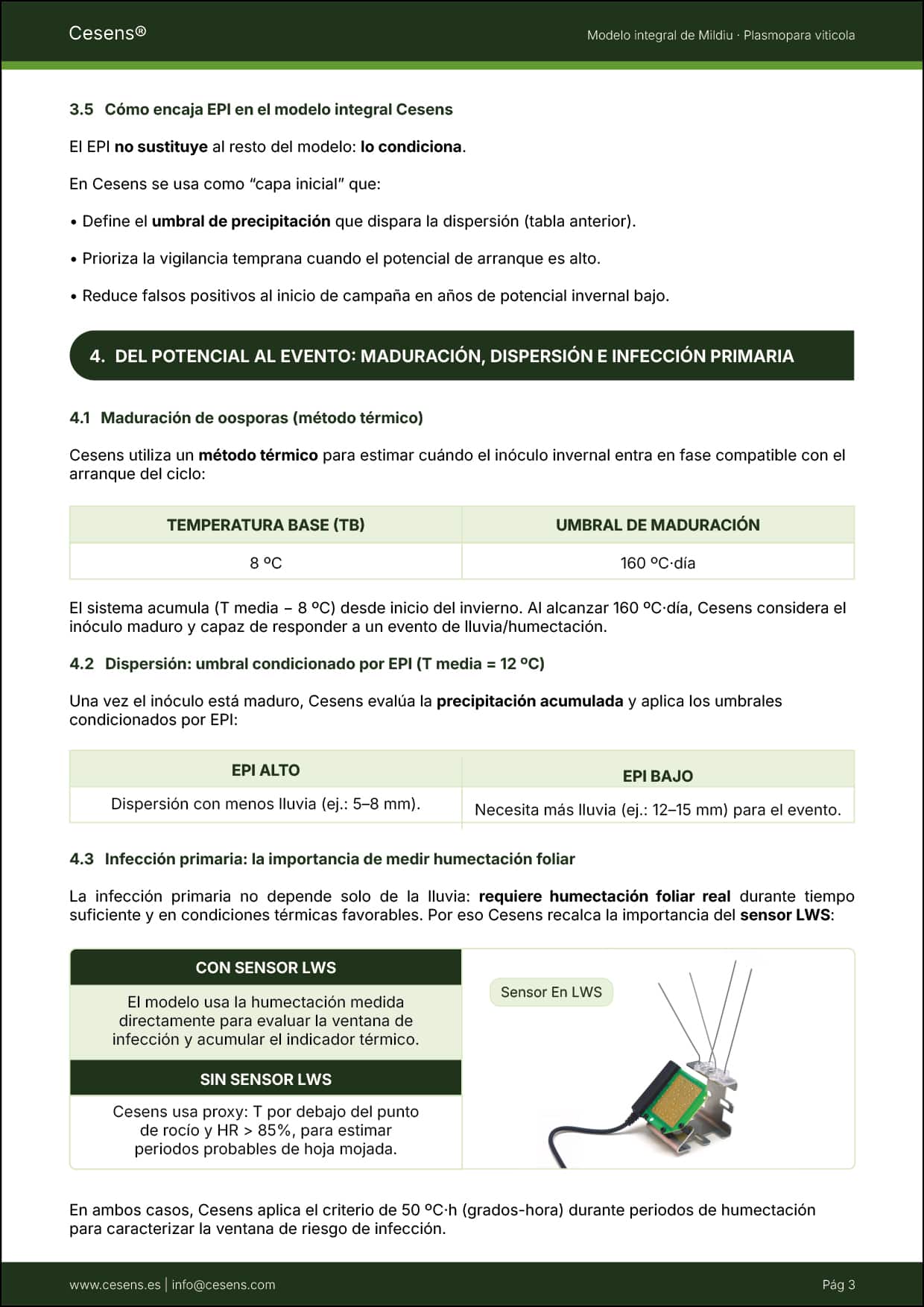
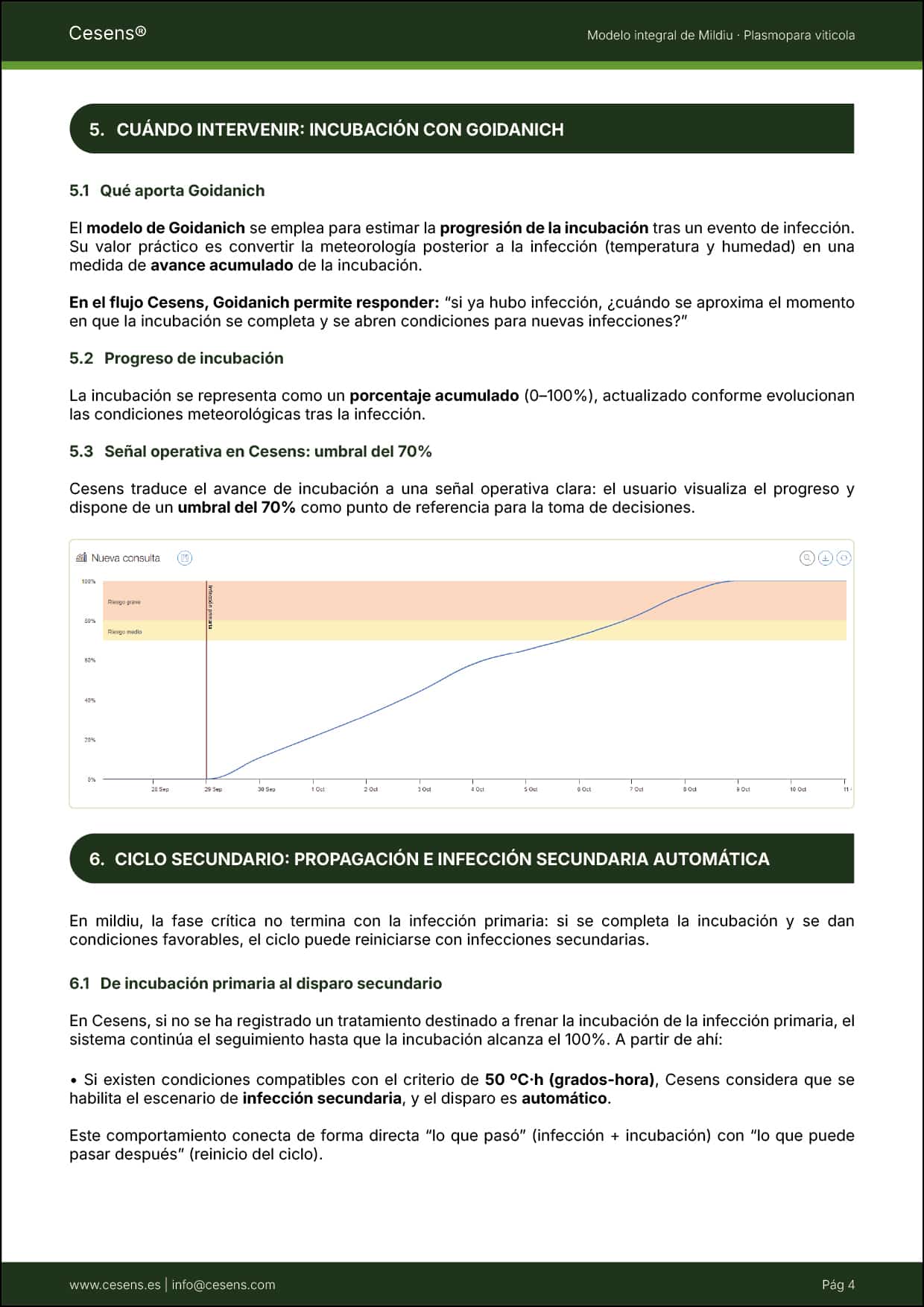
Throughout this content, we explain how Cesens integrates variables such as inoculum maturation, dispersal influenced by PPE, foliar wetting, the Goidanich incubation model, and the monitoring of spread and secondary infections, while also incorporating the effect of treatment records and days of protection to more accurately reflect what actually happens in the field.
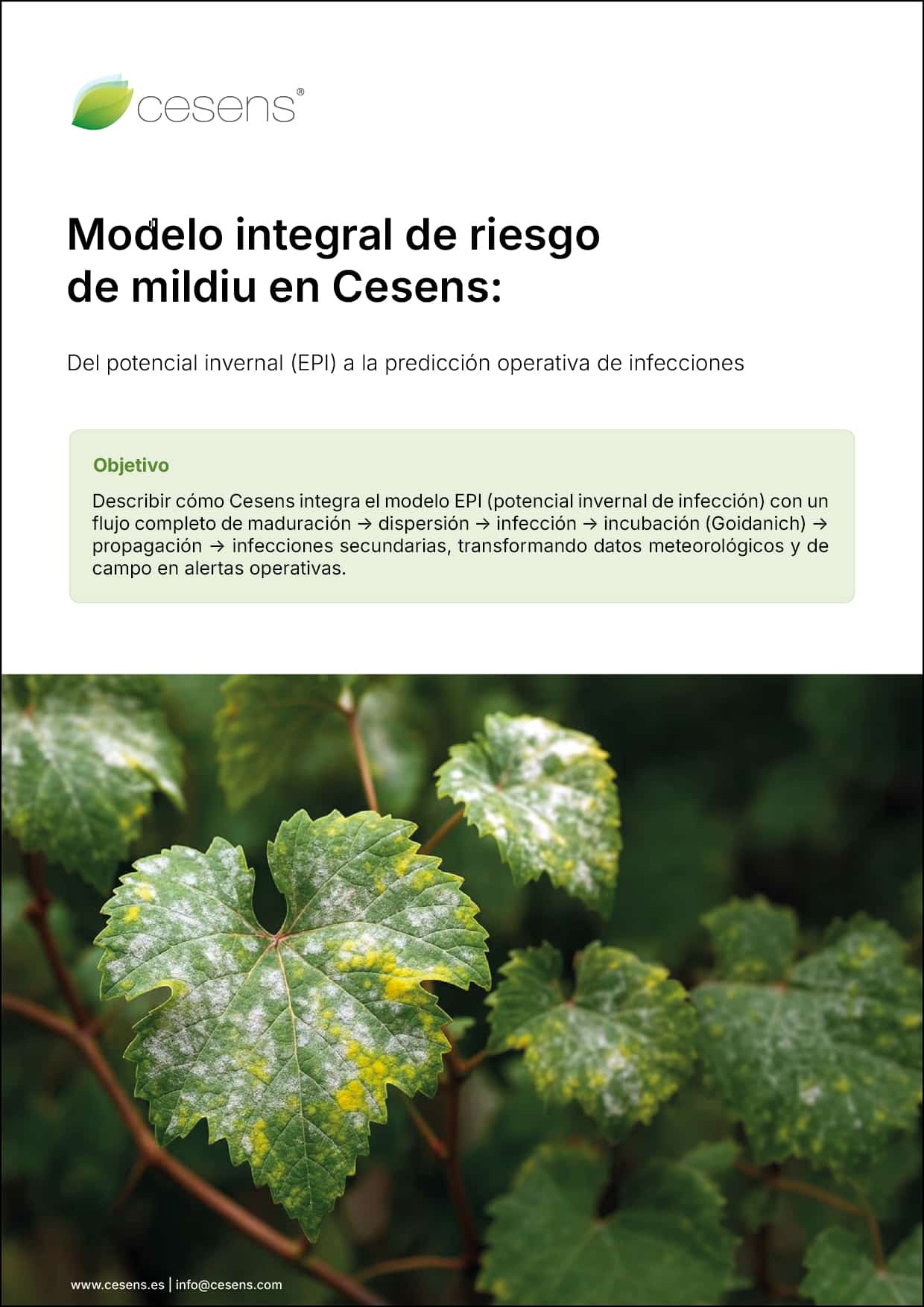
And so you can see this feature in action, at the end of this post you’ll find an explanatory video where we show you how to view and interpret this information directly from the Cesens app, so you can easily incorporate the model into your daily operations.