
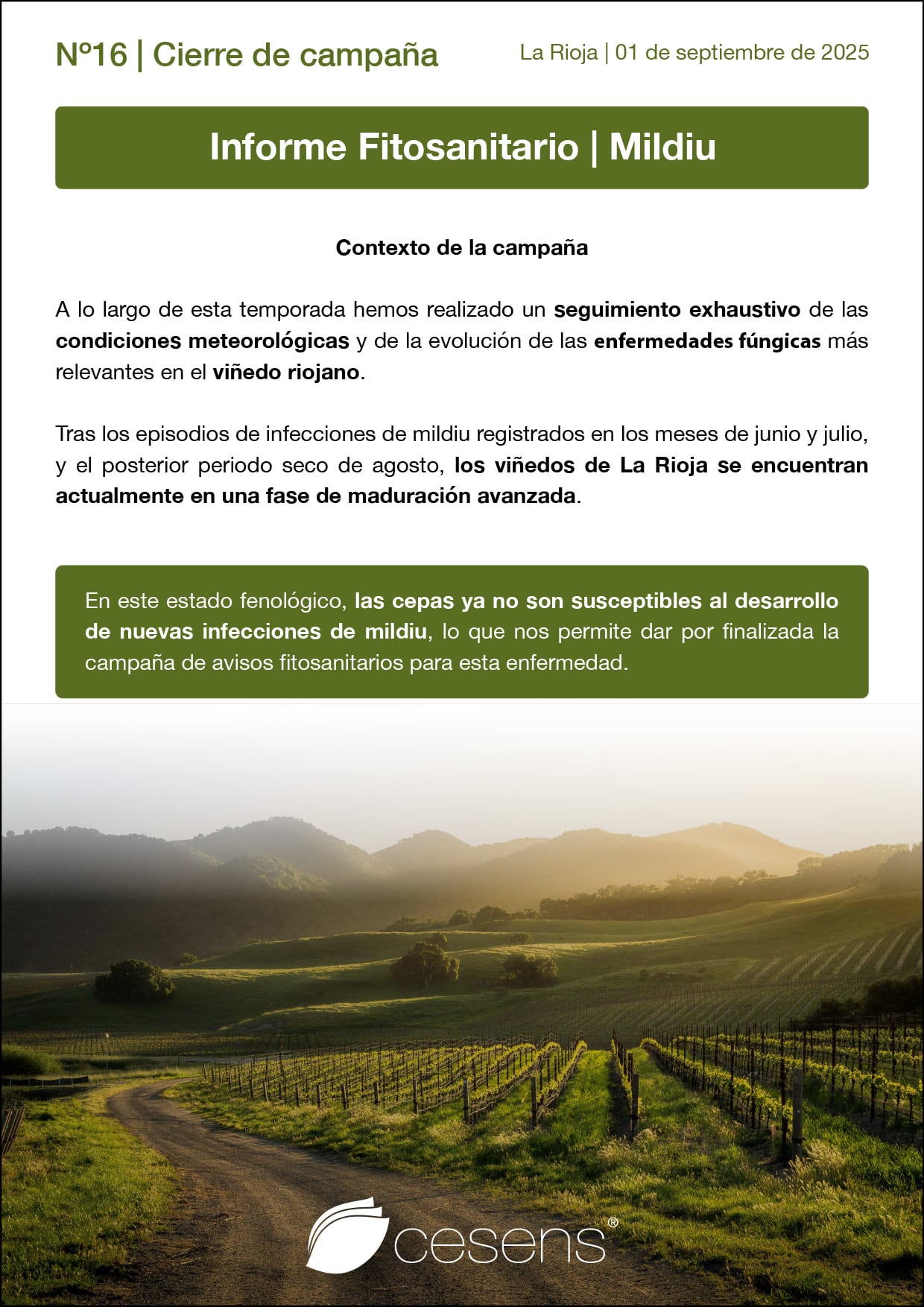
After monitoring weather conditions and the progression of downy mildew in the vineyards of La Rioja, we confirm that the vines are no longer susceptible to new infections, and the phytosanitary alert campaign for this disease is hereby concluded.
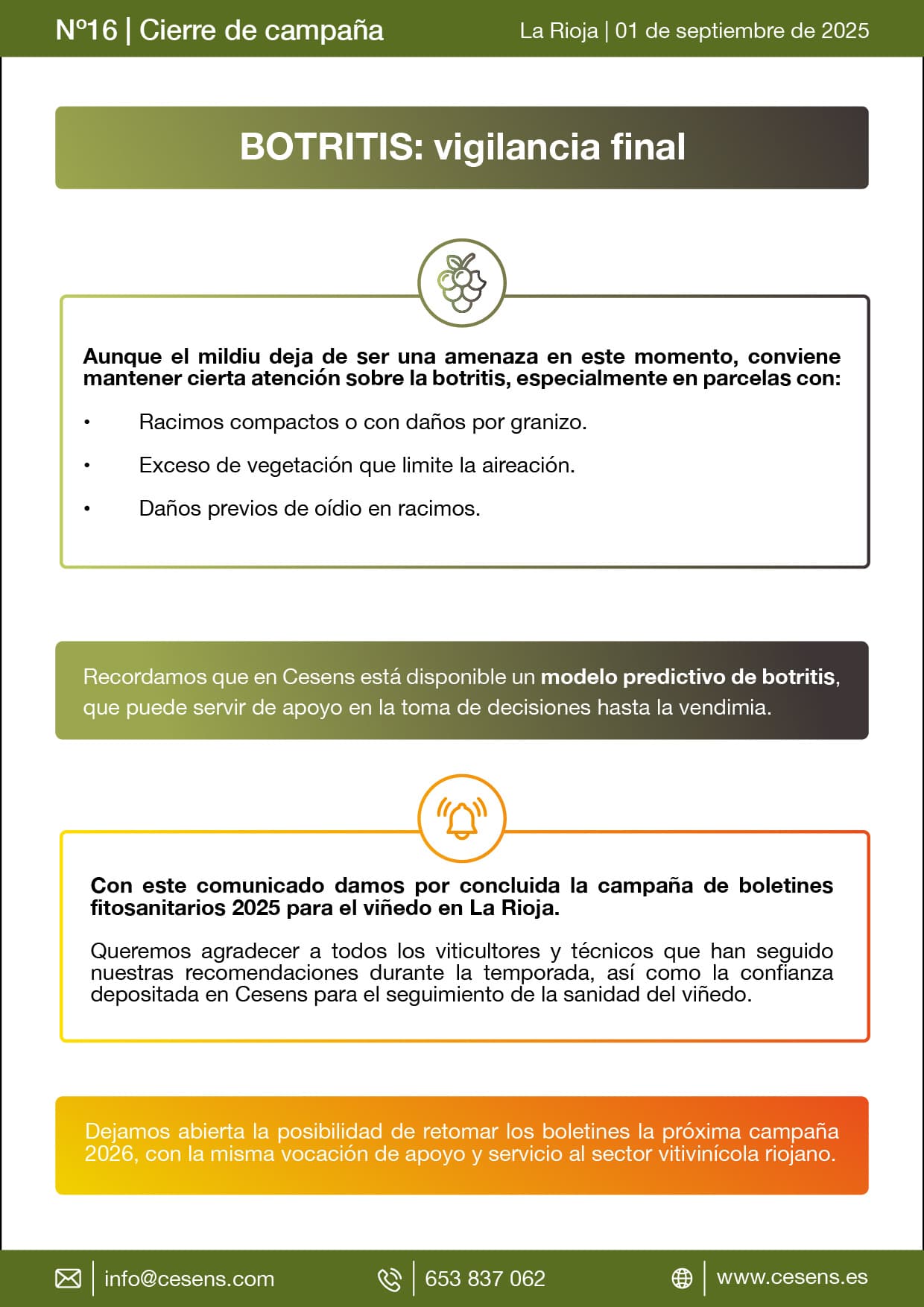
At this time, attention should be focused on botrytis, especially in plots with compact clusters, excessive foliage, or previous damage from hail or powdery mildew. At Cesens, we offer a botrytis prediction model that can assist in decision-making leading up to harvest.
No leer
Phytosanitary Report on Vineyards in La Rioja – End of the 2025 Growing Season Cesens’ Phytosanitary Report No. 16 provides a detailed analysis of the condition of La Rioja’s vineyards at the end of the 2025 growing season. During this season, weather conditions and the progression of fungal diseases such as downy mildew, powdery mildew, and botrytis—which directly affect grape quality and wine production in La Rioja—were evaluated. Following outbreaks of downy mildew in June and July, August brought a dry spell that promoted advanced ripening of the vines. Currently, La Rioja’s vineyards are no longer susceptible to new downy mildew infections, marking the end of the phytosanitary alert season for this disease. However, botrytis remains a threat to monitor, especially in plots with compact clusters, excessive vegetation, or hail damage. At Cesens, we provide winegrowers with a predictive model for botrytis that facilitates decision-making prior to harvest. With this report, we conclude the 2025 season and thank the winegrowers and technicians who have followed our recommendations for their trust. In 2026, we will resume our bulletins with the same commitment to sustainable viticulture and vineyard health in La Rioja.