Monitoring Downy Mildew in La Rioja Vineyards: Updated Report and Recommendations
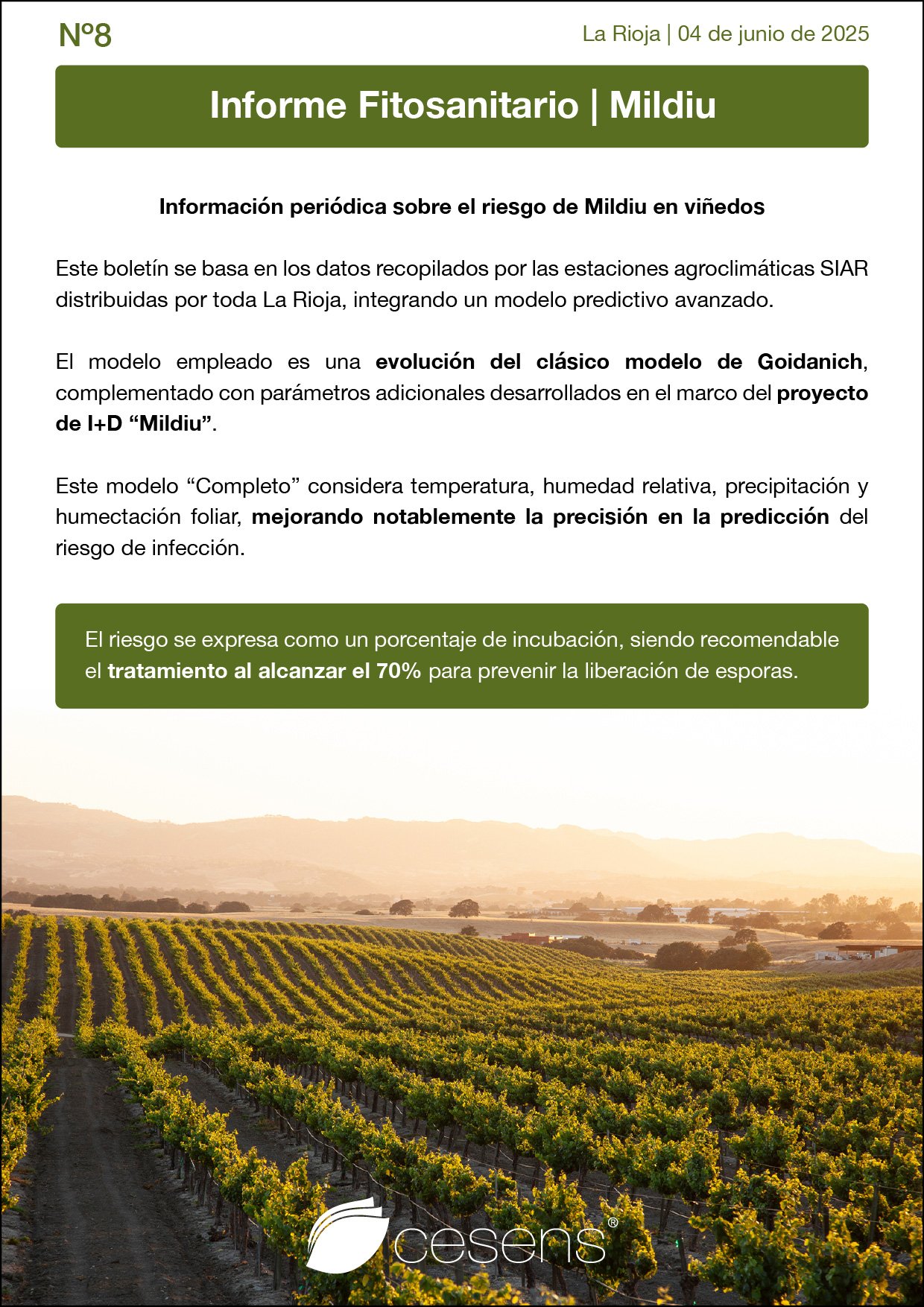
In this new phytosanitary bulletin, we share the latest information on the risk of downy mildew infection in La Rioja vineyards, compiled from SIAR agroclimatic data and processed using an advanced predictive model.
With a special focus on developments in the different regions (Upper, Middle, and Lower Rioja), this Report No. 8 details the current status of infections, treatment recommendations, and key weather forecasts for the coming days.
In addition, practical guidelines are included on how to take advantage of the Cesens platform’s features for vineyard health management.
No leer
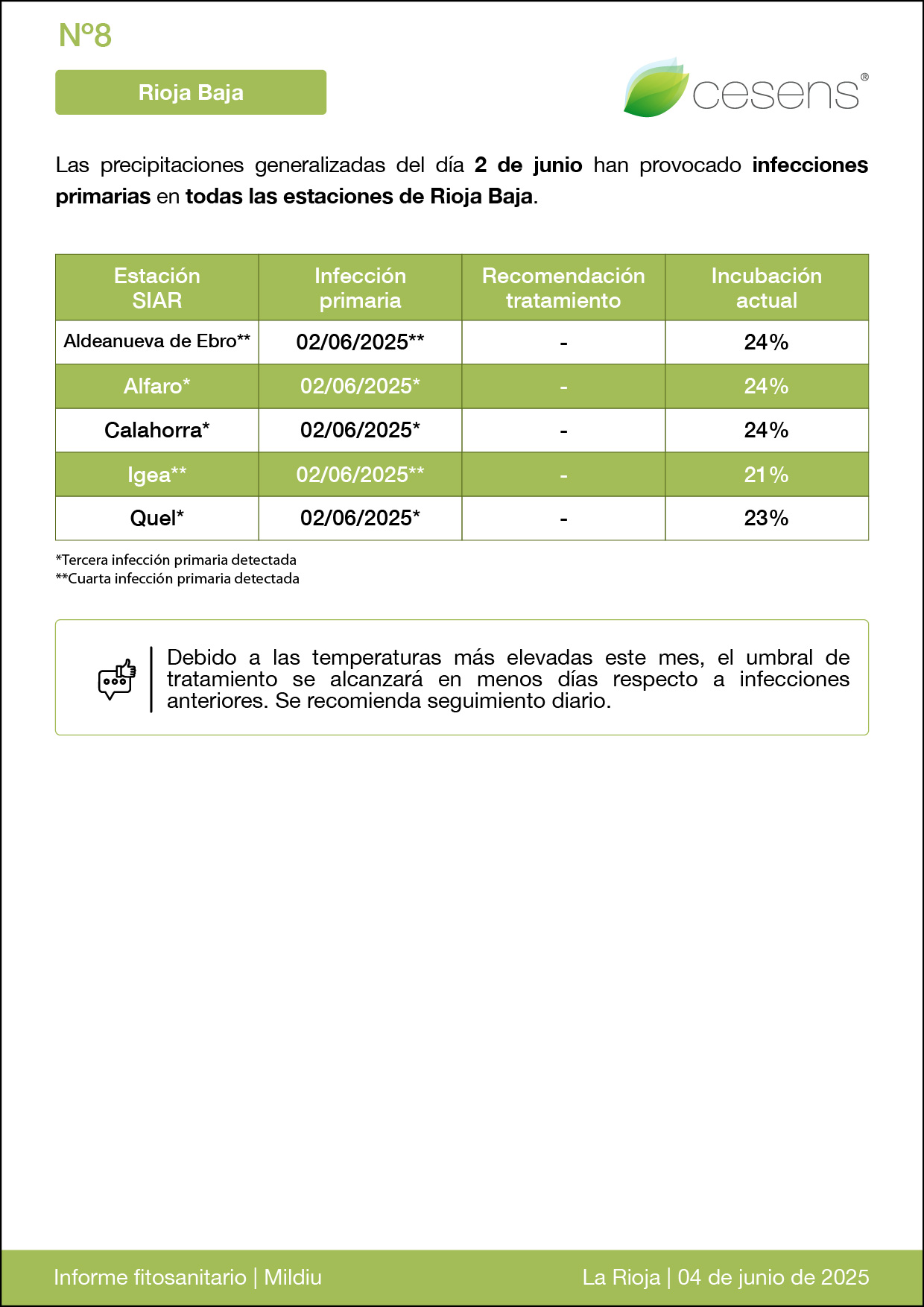
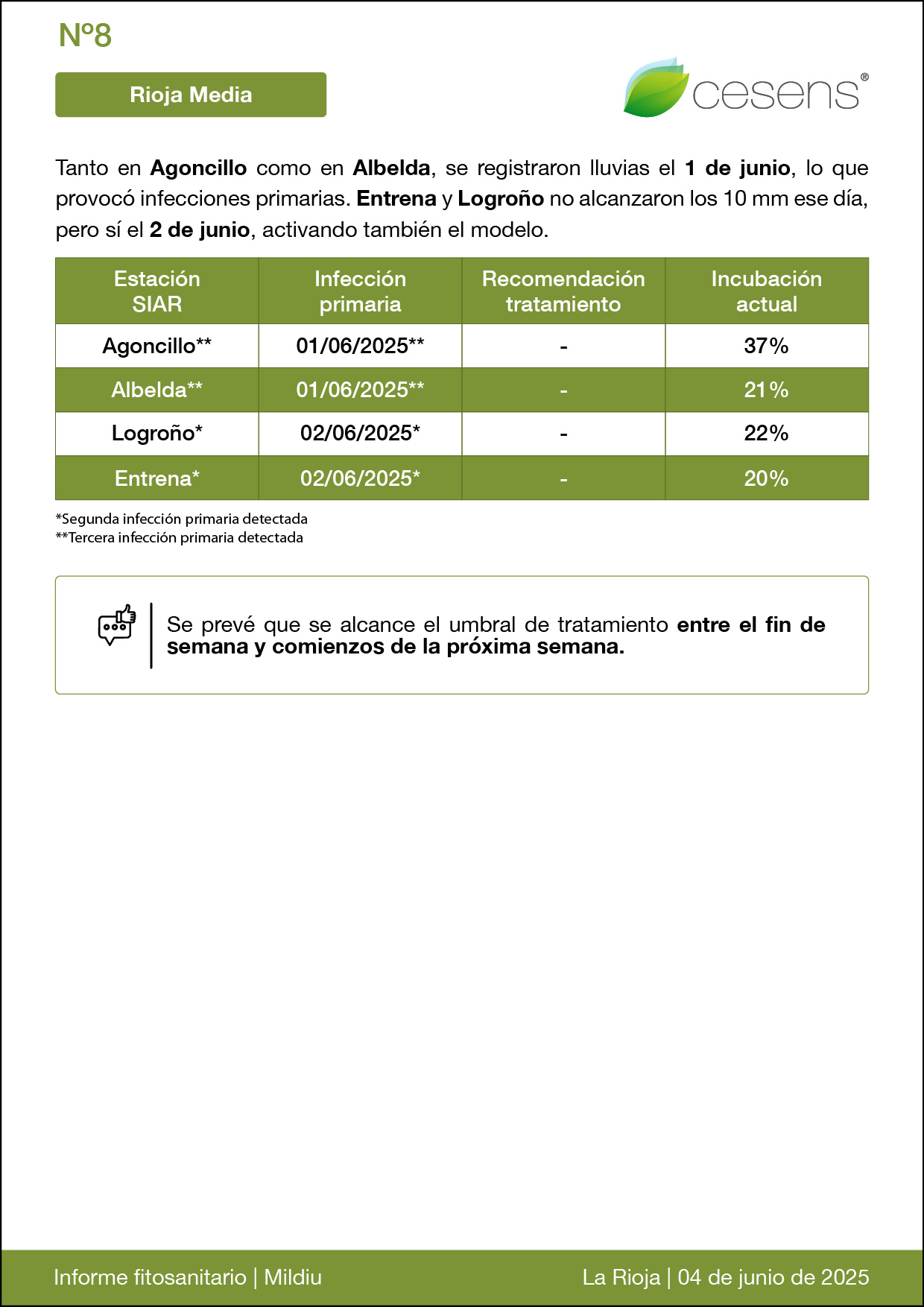
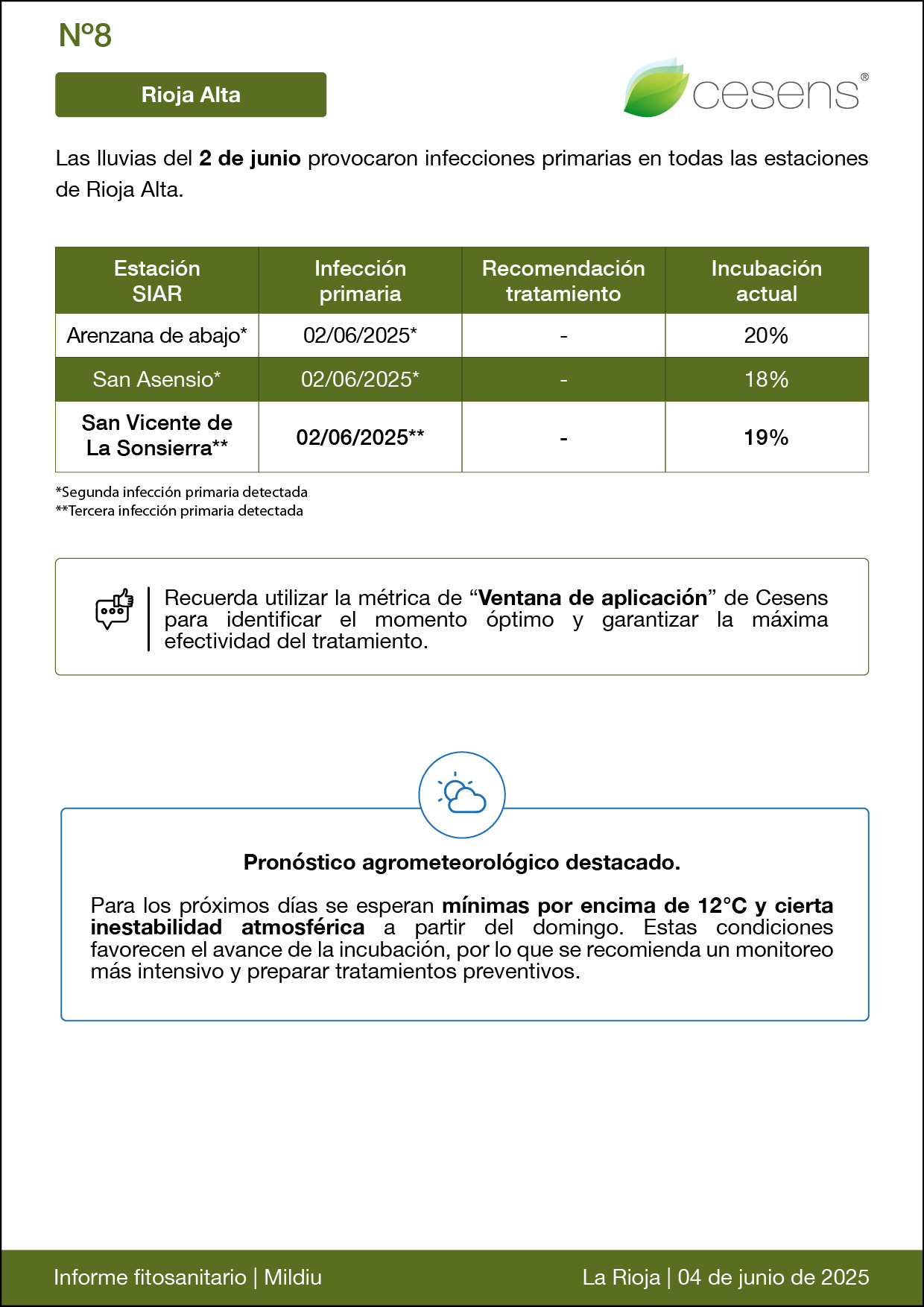
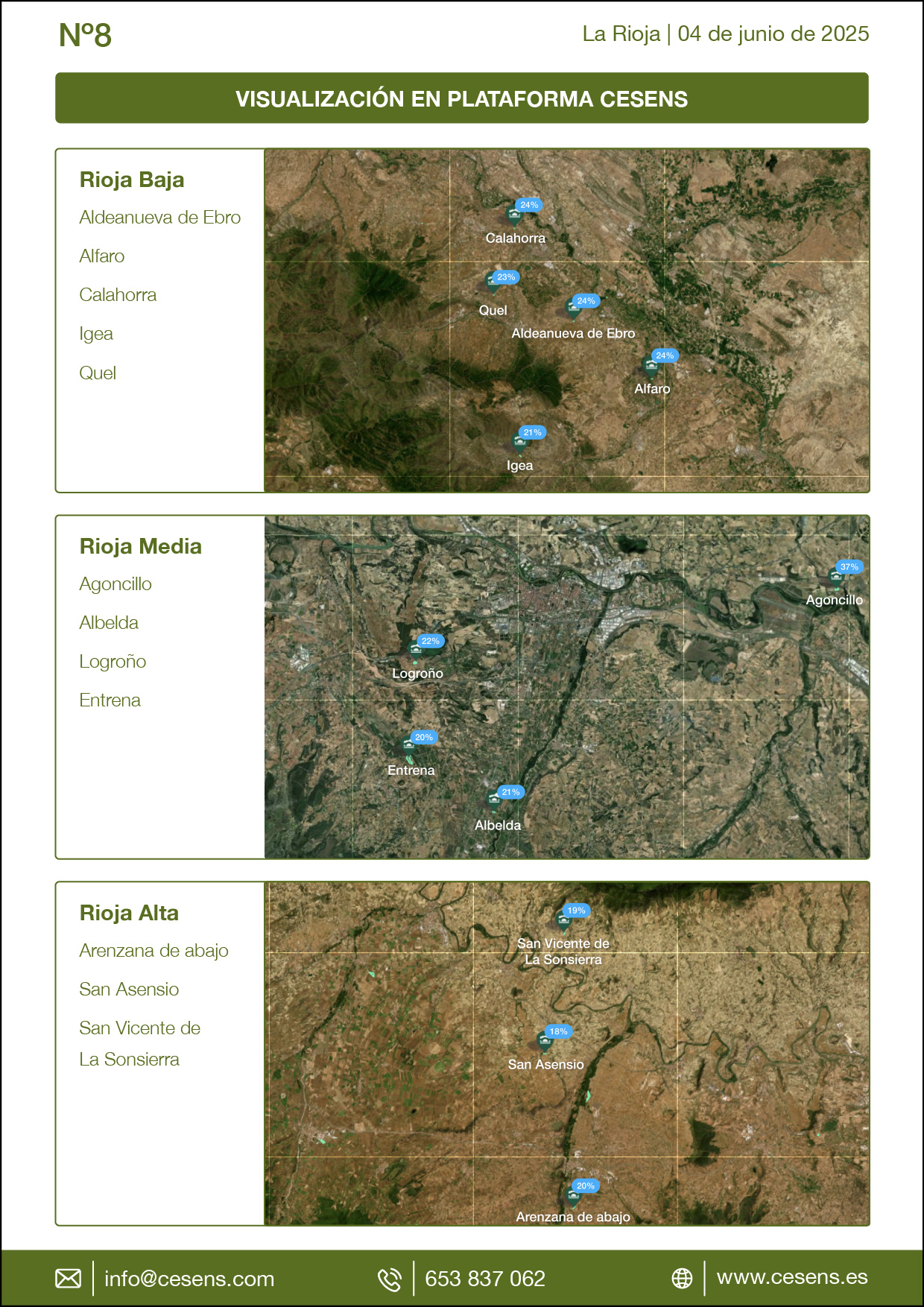
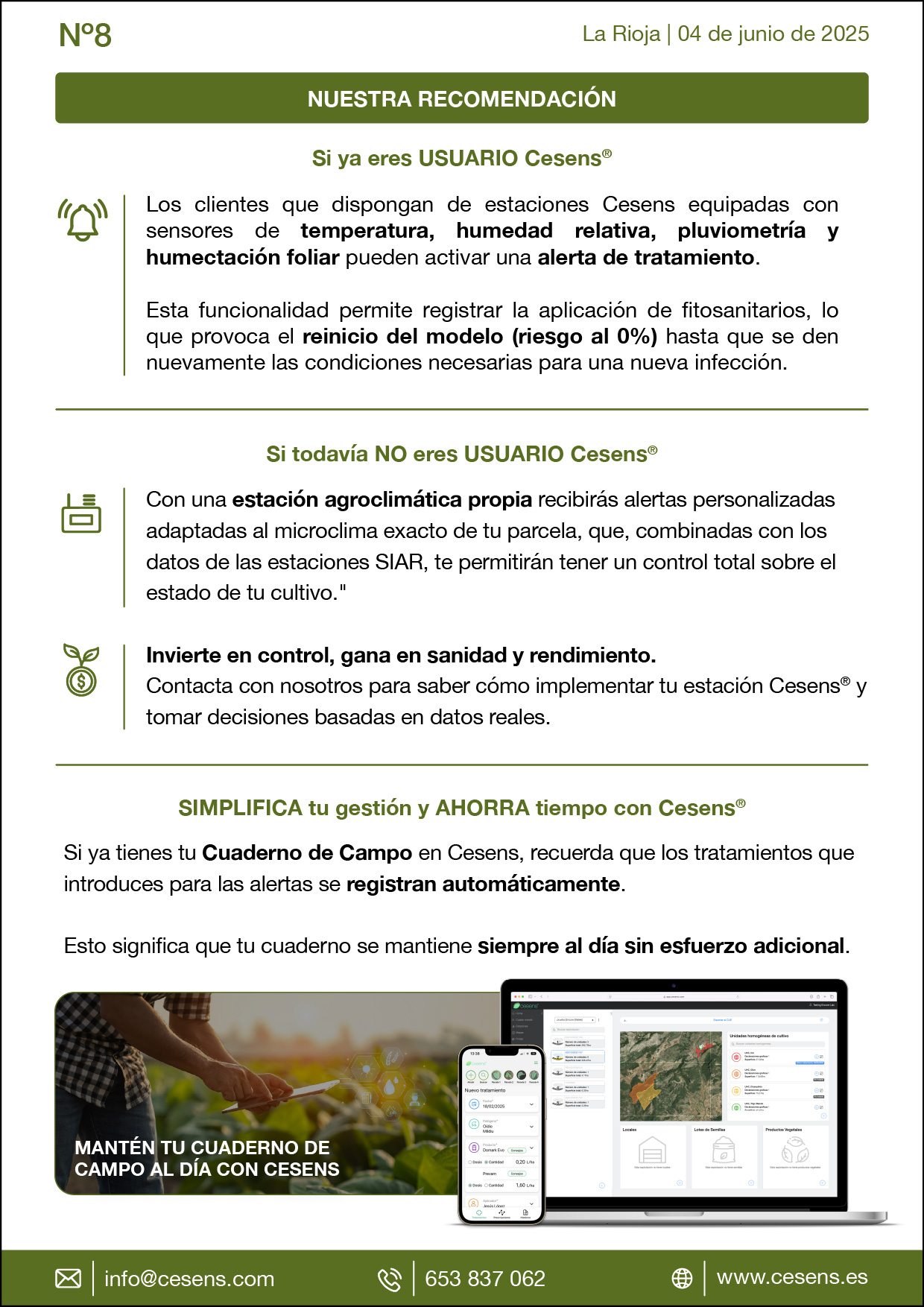
Downy Mildew Risk Report for Vineyards in La Rioja – June 2025 Do you grow grapes in La Rioja and want to know when to apply preventive treatments against downy mildew? In this new Phytosanitary Report No. 8, published on June 4, 2025, we provide you with up-to-date information on the risk of downy mildew infection in vineyards, with specific data by region: Rioja Baja, Rioja Media, and Rioja Alta. Thanks to an advanced phytosanitary prediction model—based on the classic Goidanich model and enhanced with climatic variables such as temperature, relative humidity, rainfall, and leaf wetness—this bulletin helps you anticipate the optimal time for treatment. 📊 In this edition: Primary infections have been detected at nearly all SIAR stations in La Rioja. Areas such as Agoncillo, Aldeanueva, and Albelda have incubation rates exceeding 20%. Forecast weather conditions (minimum >12°C and unstable conditions) promote rapid fungal growth. It is recommended to apply treatments as soon as 70% of the spores have germinated. Additionally, if you have a Cesens agroclimatic station, you can receive personalized alerts and automatically record treatments in your field notebook, optimizing downy mildew control in your vineyard.