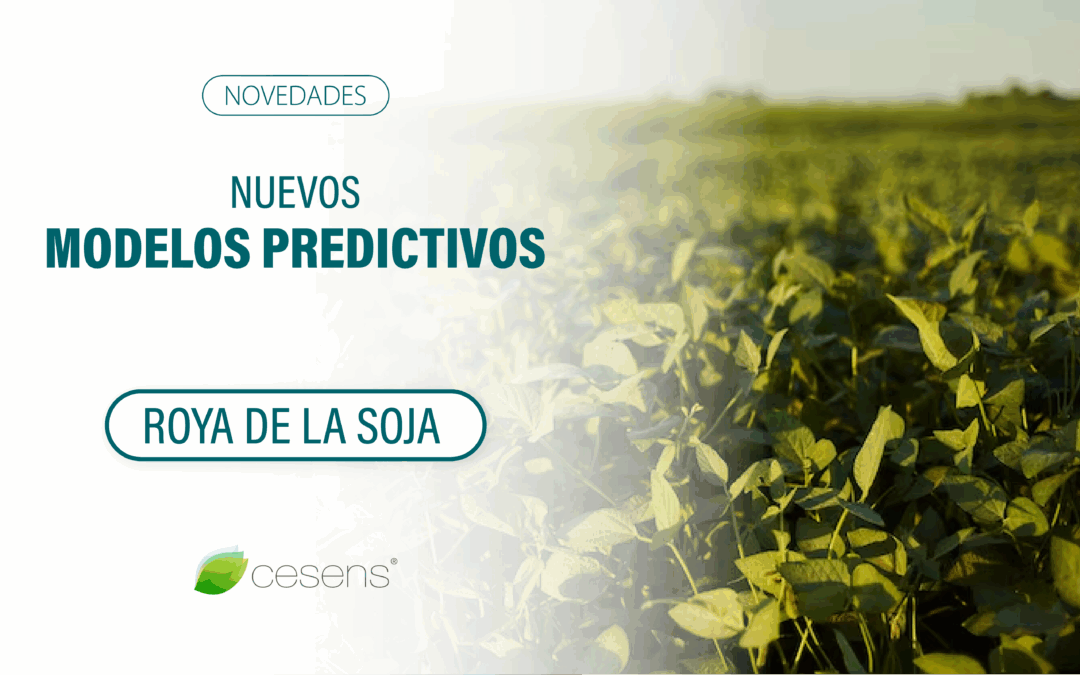
Asian soybean rust is a high-impact disease closely linked to weather conditions, particularly rainfall.
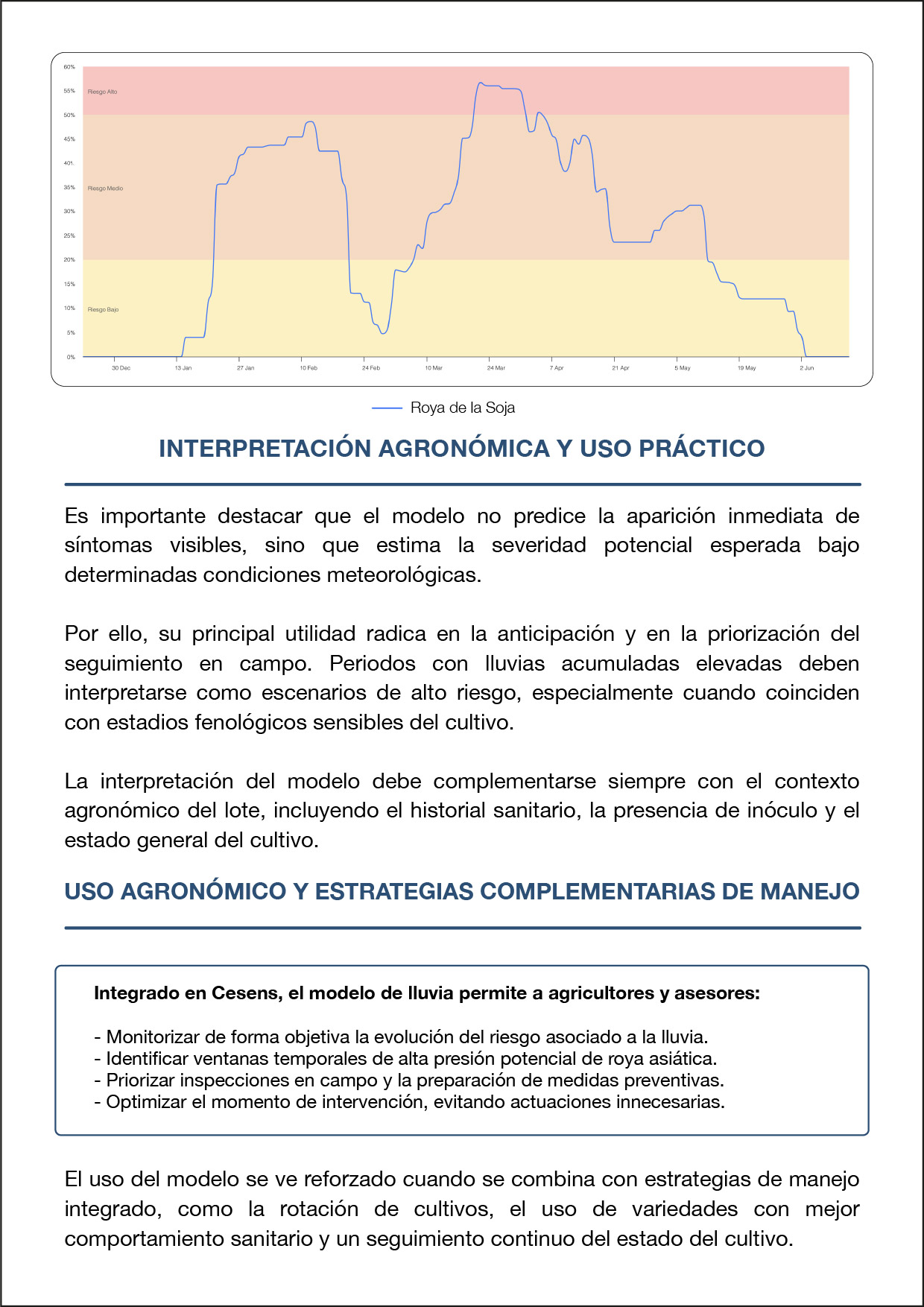
Using meteorological data and a proven predictive model, it is possible to anticipate periods of increased risk and support decision-making in the field.
The following article provides a detailed explanation of how the model works, its scientific basis, and its practical application for improving the agronomic management of the crop.

No leer
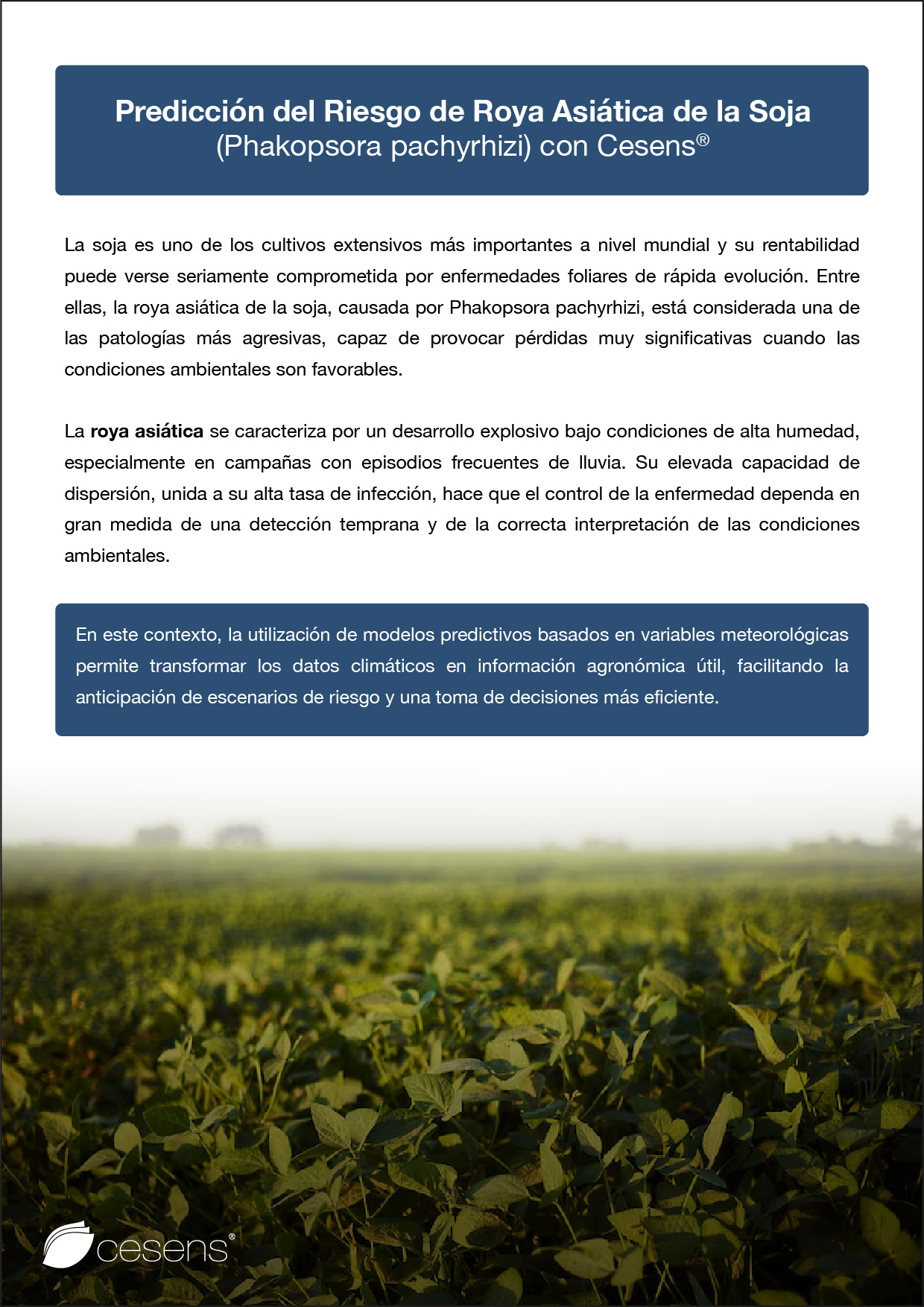
Asian soybean rust is one of the most aggressive diseases affecting this crop, capable of causing significant yield losses when conditions of high humidity, frequent rainfall, and favorable temperatures coincide. The fungus Phakopsora pachyrhizi primarily affects the foliage, reducing photosynthesis and accelerating defoliation. In this context, the use of agricultural predictive models—based on meteorological data such as cumulative rainfall and the number of rainy days—has become a key tool for integrated disease management in soybeans. Predicting the risk of Asian rust, monitoring crop health, digital agriculture, agronomic decision-making, and optimizing fungicide use all contribute to improving profitability and advancing toward more efficient and sustainable soybean crop management, especially in producing regions with high disease pressure.