
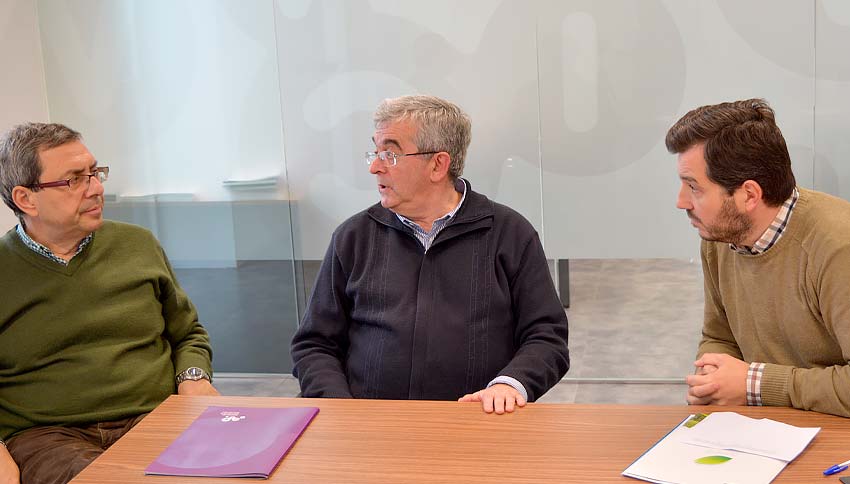
The director of the ICVV, José Miguel Martínez Zapater, presented the Institute of Vine and Wine Sciences, describing it as a center with a structure that is unique in the country, as it combines basic research with training and applied research in the sector.
He spoke about areas of research in viticulture, research on production systems, adaptation to climate change, the study of the grapevine genome for the selection of new clones, and precision viticulture. He also highlighted the creation of a new research area focused on wood diseases.
In oenology, he highlighted the use of new grape varieties that are not Saccharomyces that can ferment the must while producing less alcohol, the selection of new yeasts, and alternative methods to sulfur dioxide.
For his part, Enrique García-Escudero, head of the La Rioja Government’s Wine Research Service, spoke about viticulture and climate change. He described climate change mitigation measures such as plant cover. Regarding adaptation, he discussed shifting cultivation areas to higher elevations, the selection of grape varieties and rootstocks, intravarietal research, and the creation of adapted varieties through genetic improvement.
Regarding crop management, he stated that irrigation is the most important tool for adapting to climate change. To achieve this adaptation, it is very beneficial to use agroclimatic stations to implement controlled deficit irrigation in the vineyard.