
Corn leaf blight is one of the main threats to this crop; in this article, we explore how an innovative predictive model helps anticipate risks and optimize agronomic management.
PDF ARTICLE
No leer
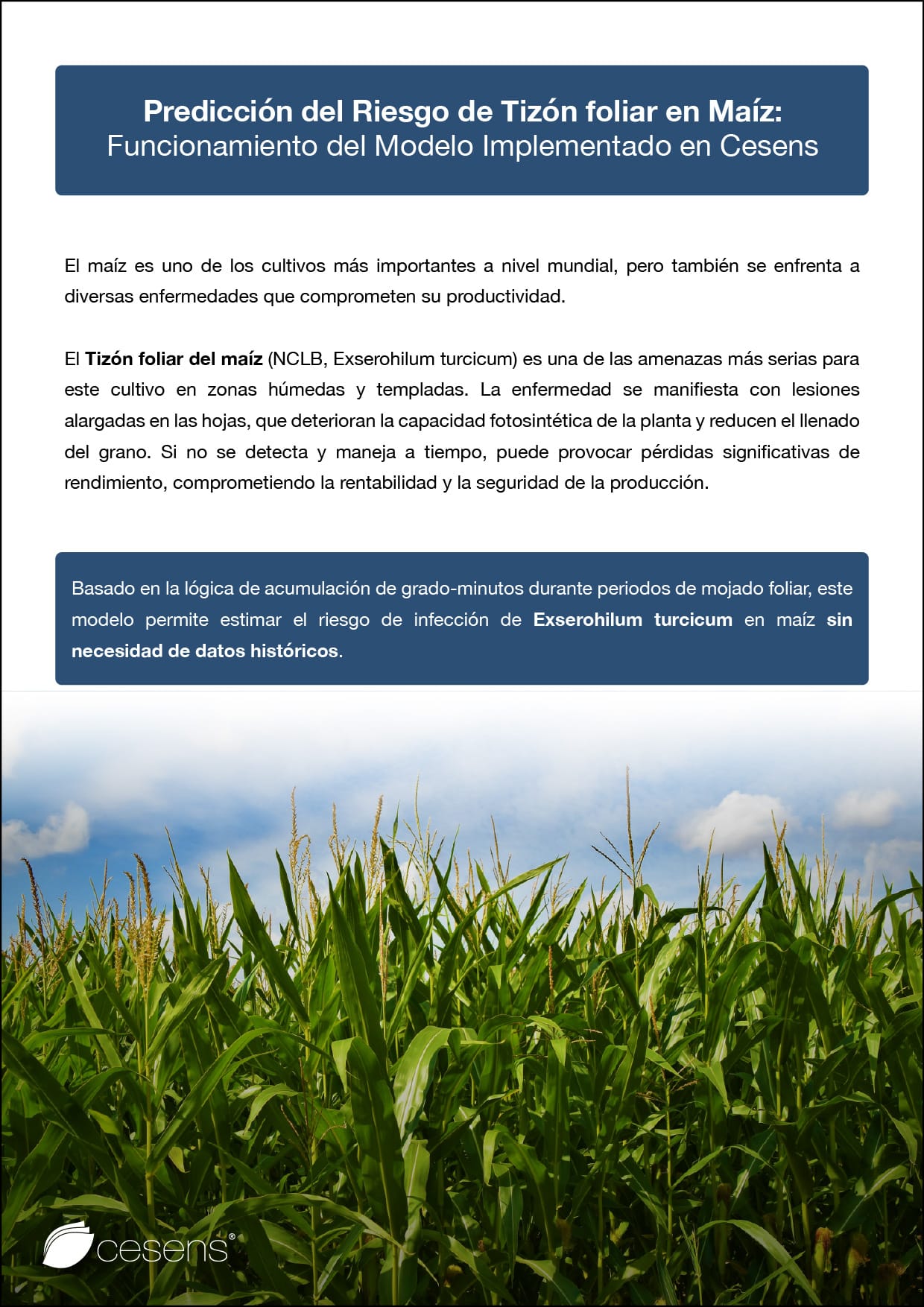
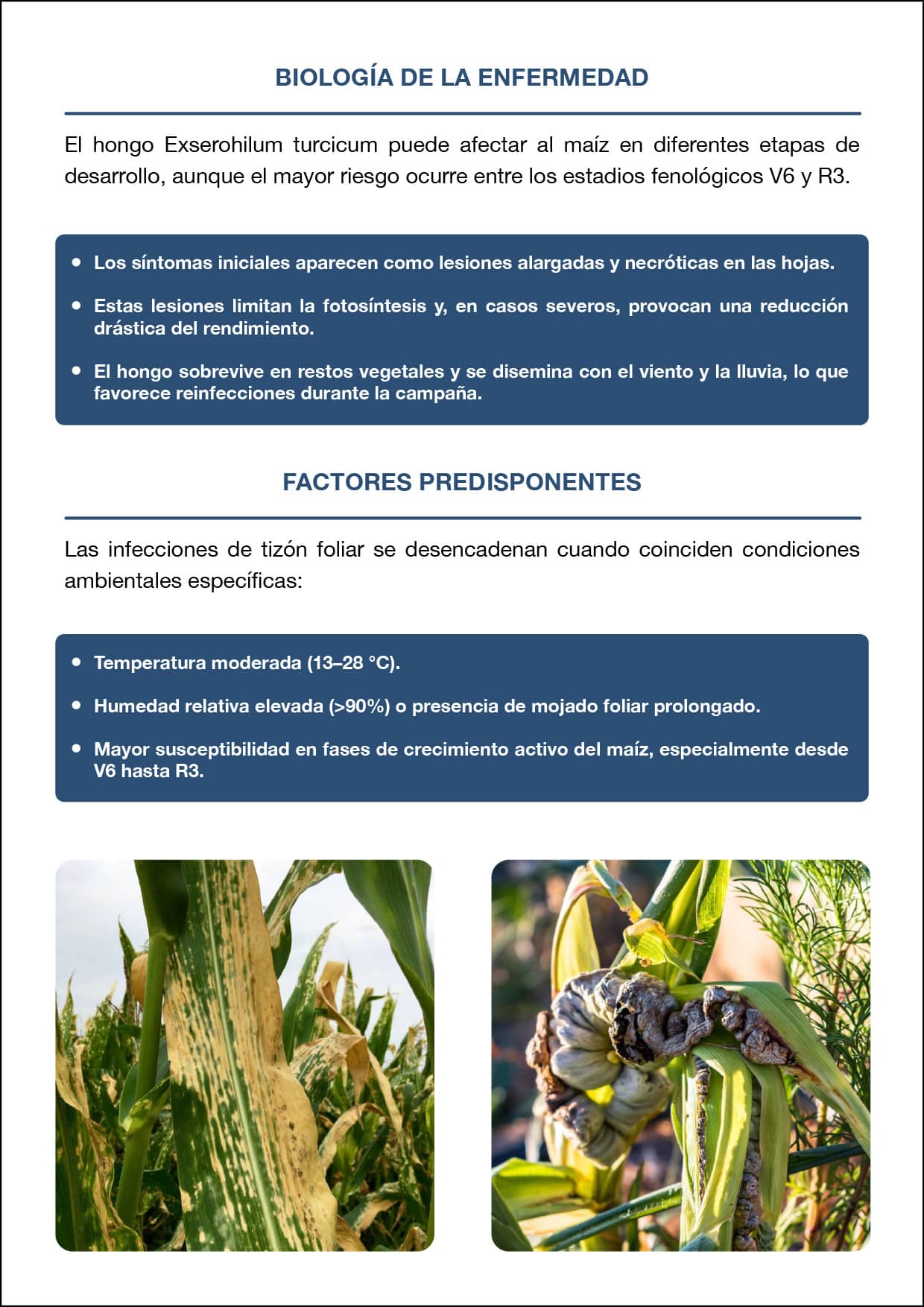
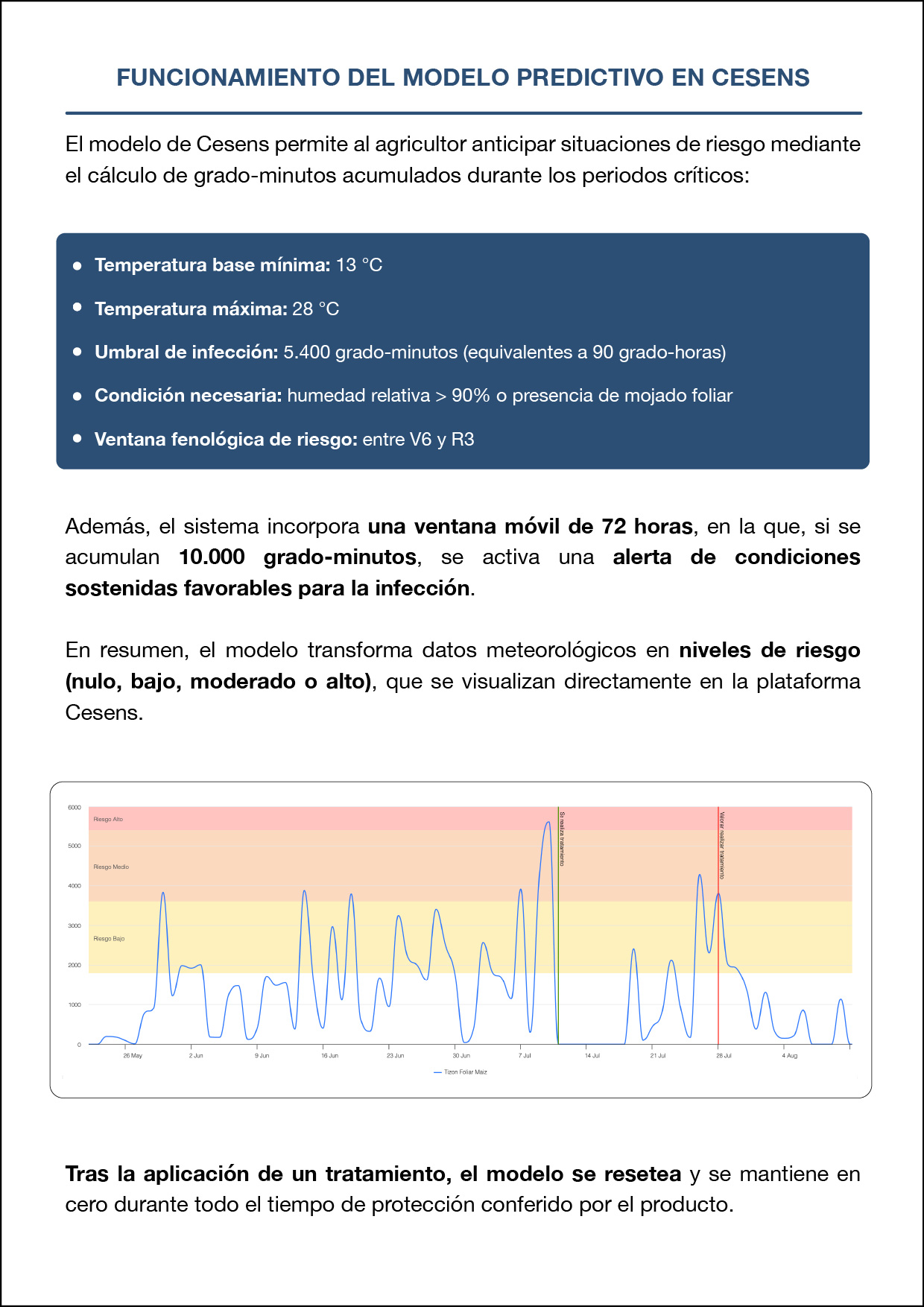
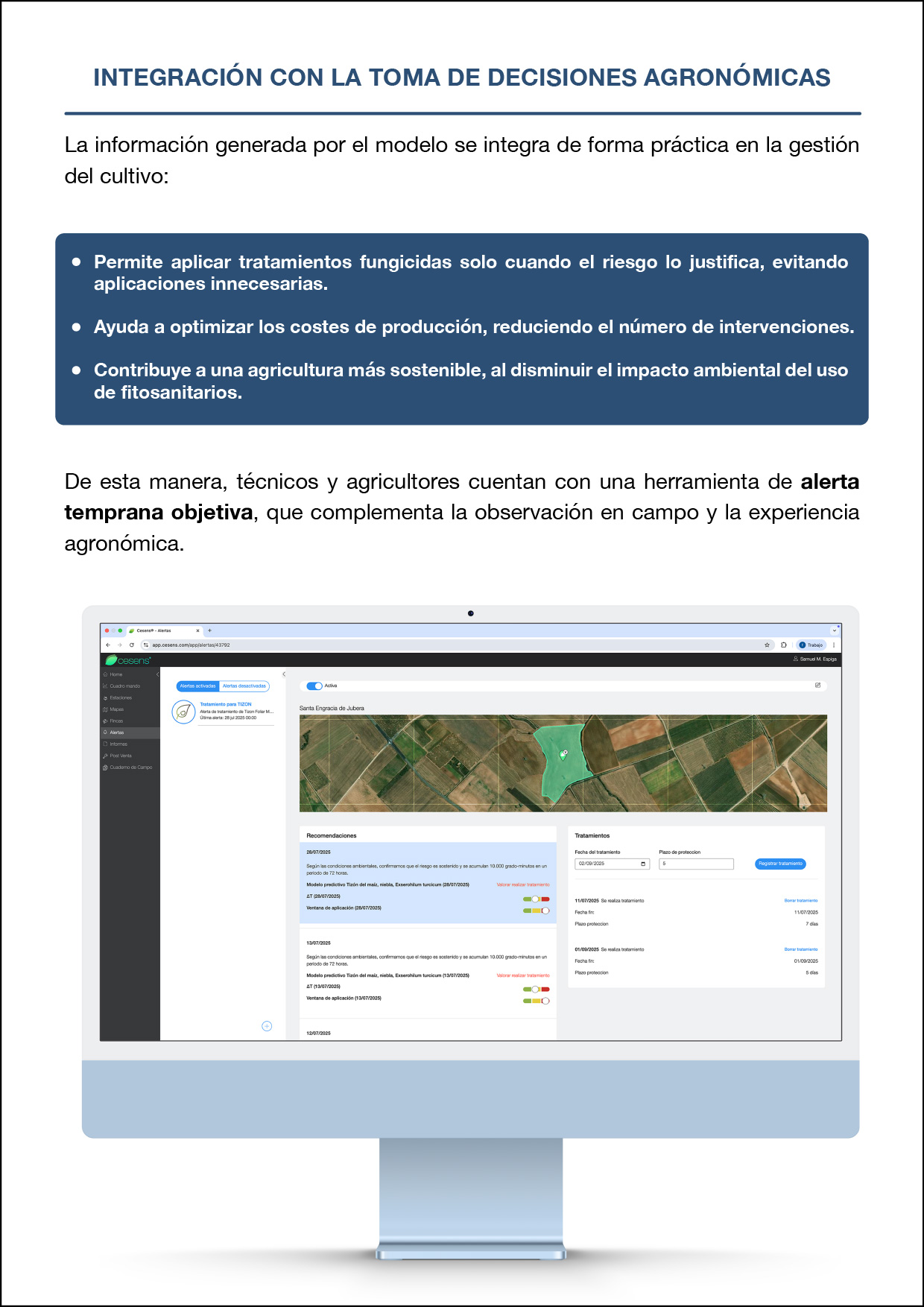
Predicting Leaf Blight in Corn: How to Protect Your Crop with the Cesens Model Corn leaf blight (Exserohilum turcicum) is one of the most common and damaging diseases in humid and temperate regions. This disease directly affects the crop’s leaves, reducing photosynthesis and limiting grain filling. If not controlled in time, it can lead to very significant losses in yield and profitability. Thanks to the predictive model implemented in Cesens, farmers can now anticipate the risk of infection and make more precise decisions to protect their crops. What is corn leaf blight? Leaf blight is caused by the fungus Exserohilum turcicum. Its main symptoms are elongated, necrotic lesions on the leaves, which can spread rapidly under the right conditions: temperatures between 13 and 28 °C. Relative humidity above 90% or prolonged periods of leaf wetness. Risk is highest during active growth stages, especially from V6 to R3. The fungus survives in plant debris and spreads easily via wind and rain, making it essential to implement prevention strategies and constant monitoring. How the Cesens Predictive Model Works The Cesens system uses real-time meteorological data to calculate degree-minute accumulation during risk periods. When 10,000 degree-minutes are exceeded within a 72-hour window, a high-risk infection alert is generated. This allows farmers to determine whether the threat is nonexistent, low, moderate, or high, and thus apply fungicide treatments only when they are truly necessary. Advantages of the model: Savings in production costs by reducing unnecessary applications. Greater precision in agronomic decision-making. Sustainable production with a lower environmental impact. Effective protection of corn yield and quality. Complementary management strategies In addition to the predictive model, it is recommended to implement integrated practices to reduce the incidence of leaf blight in corn: Crop rotation to reduce the presence of the fungus. Use of resistant or tolerant hybrids. Proper management of post-harvest residues. Frequent monitoring of the crop’s health status. Conclusion Cesens’ predictive model for leaf blight in corn is a key tool for modern agriculture. With it, it is possible to anticipate risks, protect the crop, and produce more with fewer resources. If you want to optimize your corn production and reduce the impact of diseases such as leaf blight, rely on solutions based on data and advanced technology like Cesens.